



Skin Changes During Pregnancy – What to Expect and How to Manage Them

Skin Changes During Pregnancy: Stretch Marks, Acne, Melasma & Safe Treatments
Why Your Skin Changes During Pregnancy and How to Care for It Safely
Learn about common skin changes during pregnancy, including stretch marks, acne, pigmentation, varicose veins, and itching. Understand causes, prevention tips, and safe treatment options for healthy pregnancy skincare.
Skin Changes During Pregnancy – What to Expect and How to Manage Them
Pregnancy triggers several hormonal, metabolic, and blood flow changes in the body, many of which are reflected in the skin. While some women notice a healthy pregnancy glow, others may experience issues such as acne, pigmentation changes, stretch marks, or varicose veins. Not every pregnant woman will have the same skin symptoms, and many of these changes are temporary.
Below are the most common skin changes during pregnancy and how to care for them safely.
1] Stretch Marks (Striae Gravidarum)
Stretch marks develop in around 80–90% of pregnant women, especially during the second and third trimesters. They appear as pink, red, purple, or brown streaks on the abdomen, breasts, thighs, hips, and buttocks due to rapid skin stretching and collagen breakdown.
What Helps:
- Use moisturizers with hyaluronic acid, vitamin E, or shea butter.
- Maintain healthy weight gain.
- Hydrate well and eat collagen-rich foods (eggs, fish, leafy greens).
- Post-pregnancy treatments such as laser therapy and micro-needling may reduce appearance.
2] Melasma / “Mask of Pregnancy”
Melasma causes dark, uneven patches on the face, especially on the cheeks, forehead, and upper lip. It occurs due to increased melanin production triggered by pregnancy hormones.
Prevention & Care:
- Use broad-spectrum sunscreen SPF 30–50 daily.
- Wear hats and avoid direct sunlight.
- After delivery, topical vitamin C, niacinamide, or azelaic acid may help lighten patches.
- Avoid strong bleaching agents unless approved by your doctor.
3] Pregnancy Glow
Increased blood circulation and active oil glands can give the skin a radiant appearance. However, for some women, this extra oil may lead to breakouts.
4] Acne and Pimple Breakouts
Hormonal changes can increase oil (sebum) production, causing acne flare-ups.
Safe Skin Care Tips:
- Wash face twice daily with a gentle, fragrance-free cleanser.
- Avoid harsh scrubs and strong acne medications like retinoids or salicylic acid unless medically approved.
- Use oil-free, non-comedogenic moisturizers.
- Consult a dermatologist for safe pregnancy-compatible acne treatments.
5] Varicose Veins
During pregnancy, the growing uterus increases pressure on veins, causing enlarged, bulging veins – especially in the legs.
What Helps:
- Avoid prolonged standing.
- Raise feet when resting.
- Wear compression stockings.
- Walk regularly to improve blood flow.
Most varicose veins improve within 3–12 months after delivery.
6] Spider Veins
Small, thin, reddish veins may appear on the chest, face, or arms due to increased blood circulation. These usually fade after childbirth.
7] Dry and Itchy Abdomen
As the belly expands, the skin stretches and may become dry and itchy.
Tips for Relief:
- Use moisturizing creams or oils.
- Take lukewarm (not hot) showers.
- For severe itching with nausea or fatigue, consult a doctor as it may indicate cholestasis.
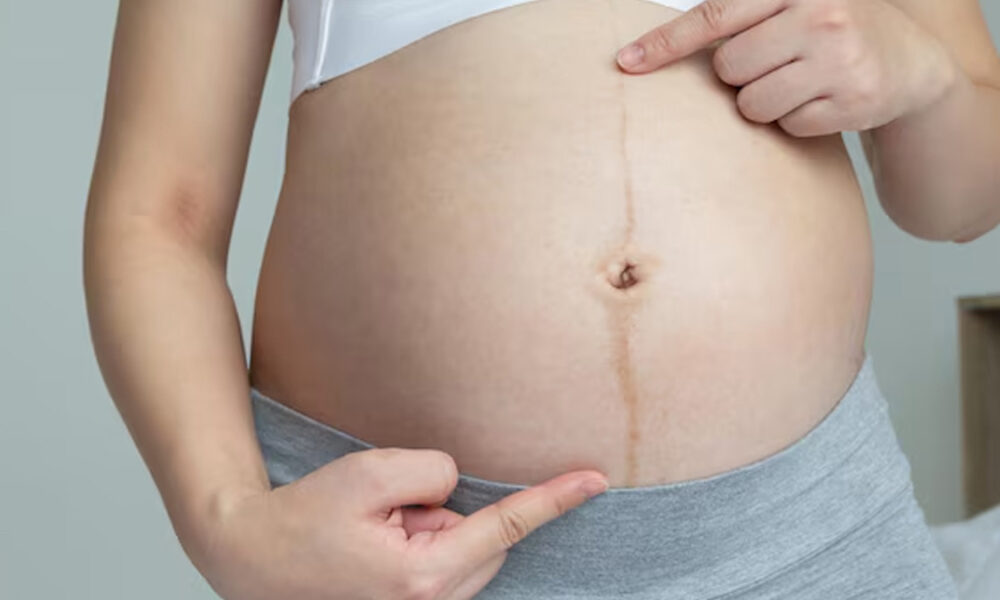
8] Linea Nigra
This is a dark vertical line from the belly button to the pubic area, caused by hormonal pigment changes. It usually fades after childbirth.
9] Skin Tags
Small, harmless skin growths may appear in areas where skin rubs together (armpits, neck, breasts). They may disappear after delivery or can be removed easily by a dermatologist.
10] Darkening of Moles and Freckles
Hormones may cause existing moles, nipples, and freckles to darken.
If a mole changes shape, size, or color, consult a dermatologist.
When to Call Your Doctor
Seek medical advice if you experience:
- Severe or spreading itching
- Yellowing of skin or eyes
- Painful varicose veins
- Sudden rash with fever
Conclusion
Most pregnancy-related skin changes are temporary and result from hormonal shifts. Good sun protection, gentle skincare, hydration, and healthy nutrition can help manage symptoms. After childbirth, many of these skin changes gradually fade or return to normal.
For Detailed Guides and Health Articles Visit: https://healthcaretipshub.com/