


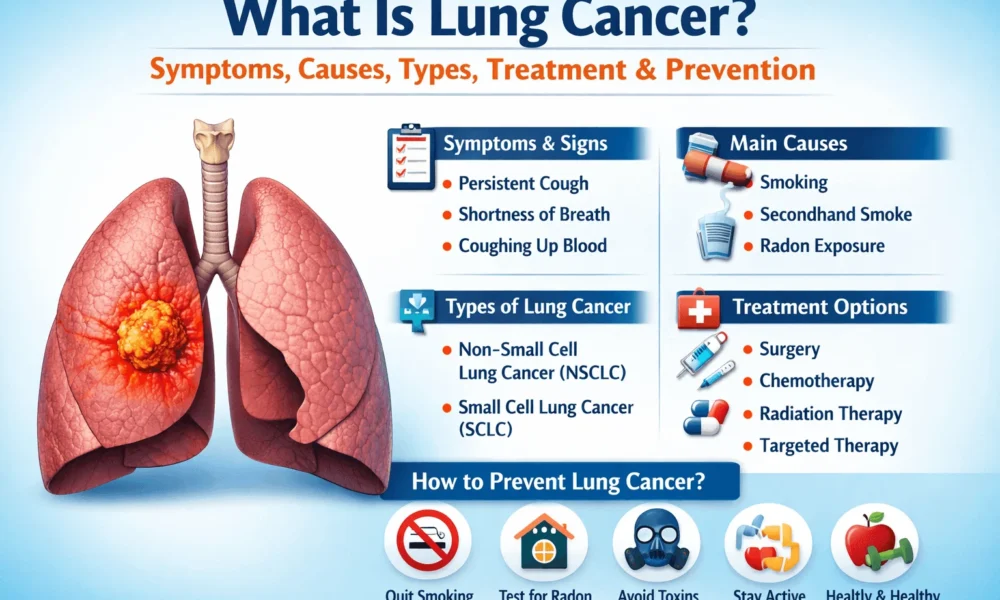

What Is Lung Cancer? Symptoms, Causes, Types, Treatment & Prevention
Lung cancer is one of the most serious and life-threatening cancers in the world. It begins when abnormal cells in the lungs grow uncontrollably, forming tumors that interfere with normal breathing and lung function. Over time, these cancer cells can spread to other parts of the body, making the disease more difficult to treat.
Because the lungs are essential for bringing oxygen into the body and removing carbon dioxide, any cancer affecting them can have a major impact on overall health.
In this complete guide, you’ll learn what lung cancer is, its early warning signs, causes, risk factors, types, diagnosis, treatment options, and ways to reduce your risk.
Important note: There is no single “best cure” for lung cancer for everyone. The most effective treatment depends on the type of lung cancer, stage, genetic markers, and the patient’s overall health. Early diagnosis offers the best chance of successful treatment.
Quick Answer: What Is Lung Cancer?
Lung cancer is a disease in which abnormal cells in the lungs grow out of control and form tumors. These tumors can affect breathing and may spread to nearby tissues or distant organs such as the brain, liver, bones, or adrenal glands.
Why Lung Cancer Happens
Healthy cells in the body grow, divide, and die in a controlled way. In lung cancer, this normal process breaks down.
Instead of dying when they should, damaged lung cells:
- Continue to grow
- Multiply too quickly
- Form tumors
- Invade nearby tissue
- Sometimes spread to other organs
This uncontrolled growth is what makes cancer dangerous.
How Common Is Lung Cancer?
Lung cancer is one of the most common cancers worldwide and remains a leading cause of cancer-related deaths in both men and women.
It is more commonly diagnosed in:
- Older adults
- Smokers and former smokers
- People exposed to harmful substances over time
Although smoking is the biggest risk factor, lung cancer can also occur in people who have never smoked.
Early Signs and Symptoms of Lung Cancer
In many people, early-stage lung cancer may not cause obvious symptoms. Signs often appear later, which is one reason the disease can be difficult to detect early.
Common Lung Cancer Symptoms
Respiratory Symptoms
- A persistent cough that does not go away
- A cough that gets worse over time
- Shortness of breath
- Wheezing
- Repeated chest infections such as:
- Bronchitis
- Pneumonia
Chest and Body Symptoms
- Chest pain
- Bone pain (especially in advanced stages)
- Coughing up blood
- Hoarseness or voice changes
- Fatigue
- Loss of appetite
- Unexplained weight loss
Other Possible Symptoms
- Headaches
- Weakness
- Swelling in the face or neck
- Difficulty swallowing
If you have a lingering cough, unexplained weight loss, or are coughing up blood, seek medical attention promptly.
What Causes Lung Cancer?
Lung cancer develops when lung cells are damaged and begin to mutate. These changes can be caused by long-term exposure to harmful substances, especially those inhaled into the lungs.
Main Causes of Lung Cancer
1) Smoking
Smoking is the leading cause of lung cancer. It is linked to the majority of cases.
Tobacco smoke contains many cancer-causing chemicals (carcinogens) that damage the cells lining the lungs.
2) Secondhand Smoke
People who do not smoke can still develop lung cancer if they are regularly exposed to secondhand smoke.
3) Radon Gas
Radon is a naturally occurring radioactive gas that can build up inside homes and buildings. Long-term exposure increases lung cancer risk.
4) Workplace Chemical Exposure
Repeated exposure to certain toxic substances may raise the risk of lung cancer, including:
- Asbestos
- Arsenic
- Chromium
- Nickel
- Diesel exhaust
- Industrial fumes
5) Air Pollution
Long-term exposure to heavily polluted air may contribute to lung cancer risk in some people.
6) Family History
A person with a close relative who had lung cancer may have a higher risk.
7) Previous Radiation Exposure
People who have received radiation therapy to the chest area may also face an increased risk.
How Does Smoking Cause Lung Cancer?
When you inhale cigarette smoke, toxic chemicals begin damaging the lung lining almost immediately.
At first, the body may repair some of this damage. But with repeated exposure:
- More cells become injured
- DNA damage increases
- Cells begin to behave abnormally
- Cancer may eventually develop
This is why the longer and heavier a person smokes, the higher the risk becomes.
However, quitting smoking at any age can significantly lower future risk.
Types of Lung Cancer
Doctors usually classify lung cancer into two major types based on how the cancer cells look under a microscope.
1) Non-Small Cell Lung Cancer (NSCLC)
Non-small cell lung cancer is the most common type of lung cancer.
It includes several subtypes:
Adenocarcinoma
- Common in both smokers and non-smokers
- Often develops in the outer parts of the lungs
Squamous Cell Carcinoma
- Often linked to smoking
- Usually develops in the central airways
Large Cell Carcinoma
- A less common but often fast-growing form
NSCLC generally grows and spreads more slowly than small cell lung cancer.
2) Small Cell Lung Cancer (SCLC)
Small cell lung cancer is less common but tends to be more aggressive.
It is strongly linked to:
- Heavy smoking
- Rapid growth
- Early spread to other parts of the body
Because of how quickly it can spread, it is often diagnosed at a more advanced stage.
Lung Cancer Stages
Doctors use staging to describe how far the cancer has spread. The stage helps determine the best treatment plan.
In general, lung cancer may be:
- Localized – limited to the lung
- Regional – spread to nearby lymph nodes or tissues
- Distant (metastatic) – spread to organs such as the brain, liver, or bones
Why staging matters:
The earlier lung cancer is found, the better the chances of effective treatment.
Risk Factors for Lung Cancer
Several factors can increase a person’s chance of developing lung cancer.
Major Risk Factors Include:
- Smoking cigarettes
- Exposure to secondhand smoke
- Radon exposure
- Air pollution
- Workplace toxins
- Family history of lung cancer
- Previous lung disease
- Older age
- History of chest radiation
Can non-smokers get lung cancer?
Yes. Although smoking is the leading cause, non-smokers can absolutely develop lung cancer.
Complications of Lung Cancer
Lung cancer can lead to several serious complications, especially if it progresses.
1) Shortness of Breath
Tumors can block airways or fluid can build up around the lungs, making breathing difficult.
2) Coughing Up Blood
Some lung tumors can cause bleeding into the airways.
3) Pain
Pain may occur in the:
- Chest
- Back
- Shoulders
- Bones (if cancer spreads)
4) Pleural Effusion
This happens when fluid builds up around the lungs, causing:
- Chest pressure
- Difficulty breathing
- Reduced lung expansion
5) Metastasis (Cancer Spread)
Lung cancer may spread to:
- Brain
- Bones
- Liver
- Adrenal glands
When this happens, symptoms can become more widespread and severe.
How Is Lung Cancer Diagnosed?
Doctors use several tests to confirm whether a person has lung cancer.
Common Diagnostic Tests
1) Physical Exam and Medical History
A doctor will review symptoms, smoking history, and risk factors.
2) Imaging Tests
These help detect tumors or suspicious changes in the lungs.
Common scans include:
- Chest X-ray
- CT scan
- PET scan
- MRI (especially if spread is suspected)
3) Sputum Cytology
A sample of mucus may be tested for cancer cells.
4) Biopsy
A biopsy is often needed to confirm the diagnosis.
This may be done through:
- Bronchoscopy
- Needle biopsy
- Endobronchial ultrasound
- Surgical biopsy
5) Molecular or Genetic Testing
Doctors may test the tumor for specific genetic changes to decide whether targeted therapy or immunotherapy may help.
Best Way To Cure Lung Cancer: What Treatment Works Best?
A lot of people search for the “best way to cure lung cancer”, but the truth is more nuanced:
The best treatment depends on:
- The type of lung cancer
- The stage
- Whether it has spread
- The person’s age and overall health
- Whether the tumor has treatable genetic mutations
The closest thing to a “best cure” is:
Early detection + the right treatment plan + ongoing specialist care
For some people, lung cancer can be cured, especially if found early. In others, treatment may focus on:
- Shrinking the cancer
- Slowing progression
- Relieving symptoms
- Extending survival
- Improving quality of life
Lung Cancer Treatment Options
Lung cancer treatment usually involves one or more of the following:
1) Surgery
Surgery may be used if the cancer is found early and is still localized.
Surgical options may include:
- Wedge resection – removes a small part of the lung
- Segmentectomy – removes a larger section
- Lobectomy – removes one lobe of the lung
- Pneumonectomy – removes an entire lung
Surgery can offer the best chance of cure in some early-stage non-small cell lung cancers.
2) Chemotherapy
Chemotherapy uses powerful drugs to destroy cancer cells or stop them from growing.
It may be used:
- Before surgery (to shrink tumors)
- After surgery (to reduce recurrence risk)
- Alongside radiation
- For advanced lung cancer
Common side effects may include:
- Nausea
- Fatigue
- Hair loss
- Appetite changes
- Lowered immunity
3) Radiation Therapy
Radiation therapy uses high-energy rays to kill cancer cells.
It may be recommended:
- As a primary treatment
- After surgery
- With chemotherapy
- To reduce symptoms such as pain or bleeding
It is especially useful when the cancer is in a limited area.
4) Targeted Therapy
Targeted therapy is one of the most important advances in modern lung cancer treatment.
These medicines target specific genetic changes in cancer cells, helping block tumor growth more precisely than standard chemotherapy.
It may be helpful in tumors with mutations such as:
- EGFR
- ALK
- ROS1
- BRAF
- KRAS (selected cases)
This is why molecular testing is now an important part of lung cancer care.
5) Immunotherapy
Immunotherapy helps the body’s own immune system recognize and attack cancer cells.
It is often used in:
- Advanced non-small cell lung cancer
- Some recurrent cases
- Tumors with certain immune markers
This treatment has improved outcomes for many patients in recent years.
6) Palliative and Supportive Care
Palliative care is not just for end-of-life care. It helps improve quality of life at any stage of serious illness.
It can help manage:
- Pain
- Shortness of breath
- Fatigue
- Anxiety
- Nausea
- Sleep issues
Supportive care can be used alongside active cancer treatment.
Can Lung Cancer Be Cured?
Sometimes, yes.
Lung cancer can be cured in some cases, especially when:
- It is diagnosed early
- It has not spread
- Surgery or curative treatment is possible
However, if lung cancer is found in a later stage, it may not always be fully curable. Even then, modern treatments can often:
- Slow the disease
- Improve symptoms
- Extend survival
- Improve day-to-day quality of life
How to Prevent Lung Cancer
There is no guaranteed way to prevent lung cancer, but there are several proven ways to reduce your risk.
1) Don’t Smoke
If you have never smoked, do not start.
2) Quit Smoking
If you currently smoke, quitting is one of the most important steps you can take for your health.
Even long-term smokers can benefit from quitting.
3) Avoid Secondhand Smoke
Try to reduce exposure at:
- Home
- Work
- Public places
4) Test Your Home for Radon
Radon is odorless and invisible, so testing is important in some areas.
5) Use Workplace Safety Protection
If you work around dust, fumes, or industrial chemicals, follow all safety precautions.
6) Eat a Balanced Diet
A diet rich in:
- Fruits
- Vegetables
- Whole foods
…supports overall health, although it does not replace medical prevention strategies.
7) Stay Physically Active
Regular exercise may support lung health and overall well-being.
When to See a Doctor
You should speak with a healthcare professional if you have:
- A cough lasting more than 3 weeks
- Coughing up blood
- Ongoing shortness of breath
- Chest pain that won’t go away
- Repeated lung infections
- Unexplained weight loss
- Persistent hoarseness
Early evaluation can make a major difference.
Frequently Asked Questions (FAQ)
1) What is lung cancer in simple words?
Lung cancer is a disease in which abnormal cells grow uncontrollably in the lungs and may form tumors.
2) What are the first signs of lung cancer?
Common early signs may include a persistent cough, shortness of breath, chest pain, hoarseness, and unexplained weight loss.
3) Can non-smokers get lung cancer?
Yes. Lung cancer can also occur in non-smokers due to factors like radon, secondhand smoke, genetics, and environmental exposure.
4) Is lung cancer curable?
It can be curable in some cases, especially when found early. Treatment success depends on the cancer type and stage.
5) What is the best treatment for lung cancer?
The best treatment depends on the patient. Options may include surgery, chemotherapy, radiation, targeted therapy, immunotherapy, or a combination.
6) Which type of lung cancer is more common?
Non-small cell lung cancer (NSCLC) is the most common type.
7) Can quitting smoking reduce lung cancer risk?
Yes. Quitting smoking significantly lowers your future risk, even if you have smoked for years.
Final Thoughts
Lung cancer is a serious disease, but understanding the symptoms, causes, and treatment options can help people take action earlier.
The most important message is this:
Early detection saves lives.
If you notice warning signs such as a persistent cough, unexplained weight loss, or coughing up blood, do not ignore them. The sooner lung cancer is diagnosed, the more treatment options may be available.
If you or a loved one are concerned about lung cancer, speak with a qualified doctor or lung specialist for evaluation and guidance.
Resource Links

Low Blood Pressure: Causes,Symptoms,Natural Remedies
How to Get Rid of Cavities?