


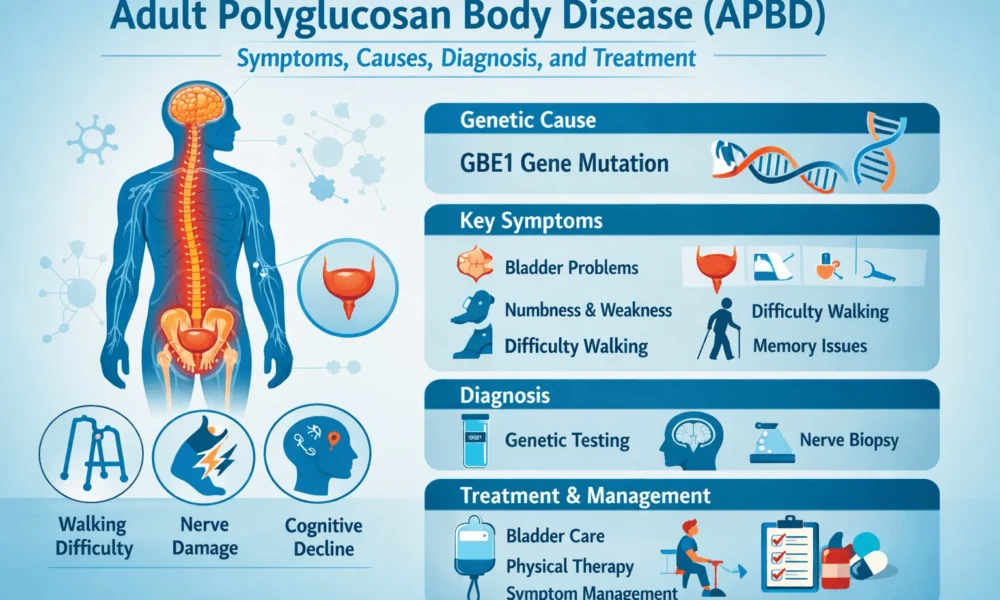
Adult Polyglucosan Body Disease (APBD) – Symptoms, Causes, Diagnosis, And Treatment
Adult Polyglucosan Body Disease (APBD): Symptoms, Causes, Diagnosis & Treatment
Learn about Adult Polyglucosan Body Disease (APBD), including symptoms, causes, diagnosis, genetic testing, treatment options, prognosis, and daily management.
Adult Polyglucosan Body Disease (APBD) – Symptoms, Causes, Diagnosis, and Treatment
Adult Polyglucosan Body Disease (APBD) is a rare genetic neurological disorder that usually begins in adulthood and gradually affects movement, bladder control, sensation, and sometimes memory or thinking. Because its symptoms can overlap with more common neurological conditions, APBD is often misdiagnosed or diagnosed late.
Although APBD is uncommon, it is important to recognize because early evaluation, genetic testing, and supportive care may help improve quality of life and reduce complications.
This guide explains what Adult Polyglucosan Body Disease is, what causes it, common symptoms, how it is diagnosed, current treatment options, and what patients and families should know.
Medical note: This article is for educational purposes only and should not replace medical advice from a neurologist, genetic specialist, or healthcare provider.
What Is Adult Polyglucosan Body Disease (APBD)?
Adult Polyglucosan Body Disease (APBD) is a glycogen storage disorder and rare inherited nervous system disease. It happens when the body cannot properly process and structure glycogen — a stored form of sugar used for energy.
Instead of being formed normally, abnormal glycogen-like material called polyglucosan bodies builds up inside cells, especially in the brain, spinal cord, and peripheral nerves. Over time, this buildup damages nerve tissue and leads to progressive neurological symptoms.
APBD usually develops in adults between ages 35 and 60, although symptoms and severity can vary widely from person to person.
Quick Answer for Featured Snippet
What is Adult Polyglucosan Body Disease (APBD)?
Adult Polyglucosan Body Disease (APBD) is a rare inherited neurological disorder caused most often by mutations in the GBE1 gene. It leads to the buildup of abnormal glycogen (polyglucosan bodies) in nerve cells, causing symptoms such as walking difficulty, bladder problems, numbness, weakness, and sometimes dementia.
How Rare Is APBD?
APBD is considered a rare disease. Its exact prevalence is unknown, but only a relatively small number of cases have been formally diagnosed worldwide. Experts believe it may be underdiagnosed, partly because its symptoms can resemble other neurological disorders such as:
- multiple sclerosis (MS)
- hereditary spastic paraplegia
- peripheral neuropathy
- spinal cord disorders
- neurodegenerative disease
What Causes Adult Polyglucosan Body Disease?
APBD is usually caused by mutations in the GBE1 gene.
The GBE1 gene gives the body instructions to make an enzyme called glycogen branching enzyme. This enzyme helps the body form glycogen correctly so it can be stored and used as energy.
When the enzyme does not work properly:
- glycogen is formed abnormally
- abnormal material called polyglucosan bodies accumulates
- nerve cells become damaged over time
How is APBD inherited?
APBD is generally inherited in an autosomal recessive pattern, meaning:
- a person inherits one altered gene from each parent
- both parents are usually carriers
- carriers often do not have symptoms themselves
What Are the Symptoms of Adult Polyglucosan Body Disease?
APBD affects the central and peripheral nervous systems, so symptoms can involve movement, sensation, bladder control, autonomic function, and cognition.
Symptoms often begin gradually and may be mistaken for “normal aging” or another neurological problem in the early stages.
Common Symptoms of APBD
1] Bladder Problems (Often an Early Sign)
One of the most common early symptoms of APBD is neurogenic bladder, which means the nerves controlling the bladder are not working normally.
This can cause:
- urinary urgency
- frequent urination
- difficulty starting urination
- incomplete emptying
- urinary incontinence
- progressive loss of bladder control
In many people, bladder symptoms appear years before walking problems become obvious. In fact, many patients first seek medical help because of urinary issues.
2] Walking Difficulty and Balance Problems
As APBD progresses, people often develop problems with walking due to a combination of:
- muscle stiffness (spasticity)
- weakness
- poor sensation in the legs
- peripheral neuropathy
- loss of balance
This can lead to:
- slow walking
- dragging one foot
- unsteady gait
- increased falls
- need for a cane, walker, or wheelchair over time
3] Numbness, Tingling, or Reduced Sensation
Many people with APBD experience peripheral neuropathy, which affects the nerves outside the brain and spinal cord.
Common signs include:
- numbness in the feet or legs
- tingling or “pins and needles”
- reduced vibration sensation
- poor awareness of foot position
- hand or foot weakness
A common early issue is foot drop, where the front part of the foot becomes difficult to lift while walking.
4] Muscle Weakness and Spasticity
APBD can affect both upper and lower motor neurons, which may lead to:
- leg stiffness
- tight muscles
- progressive weakness
- difficulty climbing stairs
- trouble standing for long periods
- fatigue with movement
Over time, symptoms may also involve the upper body in some individuals.
5] Cognitive Changes and Dementia
About half of affected individuals may experience some degree of cognitive decline. This may begin as:
- poor concentration
- slower thinking
- mild memory problems
- reduced executive functioning
In some cases, symptoms may progress to dementia, especially later in the disease course.
6] Autonomic Nervous System Symptoms
Because APBD can also affect the autonomic nervous system, some people may develop:
- constipation
- sexual dysfunction
- blood pressure instability
- abnormal sweating
- temperature regulation issues
- unusual fatigue or exhaustion
When Do APBD Symptoms Usually Start?
Most people with APBD begin to notice symptoms between ages 35 and 60, though onset can vary. Bladder issues or subtle walking problems may appear first, followed by more noticeable neurological symptoms over time.
Because APBD progresses slowly, some people may live with symptoms for years before receiving the correct diagnosis.
How Is Adult Polyglucosan Body Disease Diagnosed?
Diagnosing APBD usually involves a combination of clinical evaluation, neurological testing, imaging, and genetic confirmation.
A neurologist may suspect APBD in an adult who has:
- progressive bladder dysfunction
- walking difficulty
- sensory neuropathy
- spasticity
- white matter changes on MRI
- a suggestive family or ethnic background
Tests Used to Diagnose APBD
1] Neurological Examination
Doctors assess:
- reflexes
- strength
- gait
- balance
- coordination
- sensation
- signs of upper and lower motor neuron involvement
2] Genetic Testing
Genetic testing is one of the most important tools for confirming APBD.
It looks for mutations in the GBE1 gene, which is strongly associated with the disorder. In many modern clinical settings, genetic testing can help confirm the diagnosis and may reduce the need for more invasive procedures.
3] MRI of the Brain and Spinal Cord
MRI may show characteristic changes, including:
- white matter abnormalities
- changes in the brainstem
- spinal cord atrophy
- cerebral or cerebellar atrophy in some patients
These MRI findings can sometimes resemble other neurological diseases, which is one reason APBD may be misdiagnosed.
4] Enzyme Activity Testing
Doctors may test whether the body is producing enough glycogen branching enzyme by analyzing:
- skin fibroblasts
- white blood cells
- specialized laboratory samples
5] Nerve or Tissue Biopsy (Less Common Today)
Historically, some patients were diagnosed through a sural nerve biopsy, which can show the presence of polyglucosan bodies under the microscope.
However, this is often less necessary now when genetic testing is available.
Is There a Cure for Adult Polyglucosan Body Disease?
At present, there is no cure for APBD.
Treatment focuses on:
- managing symptoms
- improving mobility and independence
- protecting bladder and urinary function
- supporting cognition and quality of life
That said, research is ongoing, and experimental therapies continue to be studied.
Treatment for APBD
Because APBD affects multiple body systems, treatment often involves a multidisciplinary team, including:
- neurologists
- urologists
- physiatrists
- physical therapists
- occupational therapists
- neuropsychologists
- genetic counselors
1] Bladder Management
Bladder symptoms often require ongoing care.
Treatment may include:
- scheduled urination plans
- medications for bladder function
- intermittent catheterization
- indwelling catheter in some cases
- urology follow-up to reduce complications
2] Physical and Occupational Therapy
These therapies can help maintain:
- strength
- mobility
- balance
- fall prevention
- independence in daily activities
Supportive devices may include:
- ankle-foot braces
- canes
- walkers
- wheelchairs
- adaptive home equipment
3] Cognitive and Behavioral Support
For patients with cognitive changes, support may include:
- memory aids
- structured routines
- caregiver support
- neuropsychological evaluation
- behavioral strategies
4] Symptom-Specific Treatment
Doctors may also treat related symptoms such as:
- spasticity
- constipation
- fatigue
- pain
- mood changes
- sleep difficulties
What About Triheptanoin and Experimental Treatments?
One therapy that has been studied in APBD is triheptanoin, a synthetic oil that has been explored as a metabolic treatment.
Early studies have suggested possible stabilization or limited functional benefit in some patients, but more research is needed to confirm its long-term safety and effectiveness in APBD. As of now, it is not considered a standard cure or universally established treatment.
Researchers are also studying other possible therapies in laboratory and animal models.
What Is the Prognosis for APBD?
APBD is usually a slowly progressive disease, but the rate of progression varies from person to person.
Natural history data suggest:
- bladder symptoms often begin first
- walking problems typically worsen over time
- many patients eventually require mobility assistance
- life expectancy may be reduced compared with the general population, though many people live for years after diagnosis
Early diagnosis, symptom management, rehabilitation, and supportive care may help preserve function and improve daily life.
Living With Adult Polyglucosan Body Disease
Living with APBD can be physically and emotionally challenging, especially because it is rare and often unfamiliar to non-specialists.
Helpful long-term support strategies may include:
- regular neurology follow-up
- bladder monitoring
- home safety modifications
- mobility support
- mental health counseling
- caregiver education
- genetic counseling for family members
For many families, understanding the diagnosis itself can be a major step toward better planning and support.
Final Thoughts
Adult Polyglucosan Body Disease (APBD) is a rare but important neurological condition that can affect movement, bladder function, sensation, and cognition. Although it progresses slowly and there is currently no cure, timely diagnosis and supportive treatment can make a meaningful difference.
If an adult has unexplained neurogenic bladder, walking difficulty, spasticity, neuropathy, or white matter changes on MRI, APBD may be worth discussing with a neurologist or genetic specialist.
Awareness matters — especially with rare disorders that are often missed.
Frequently Asked Questions (FAQ)
1] What is Adult Polyglucosan Body Disease (APBD)?
APBD is a rare inherited neurological disorder caused most often by GBE1 gene mutations, leading to abnormal glycogen buildup in nerve cells.
2] What are the first symptoms of APBD?
Early symptoms often include urinary problems, numbness in the legs, walking difficulty, balance issues, and foot drop.
3] Is APBD hereditary?
Yes. APBD is usually inherited in an autosomal recessive pattern, meaning a person typically inherits one altered gene from each parent.
4] Can APBD cause dementia?
Yes. Some people with APBD develop mild cognitive impairment or, in some cases, dementia over time.
5] How is APBD diagnosed?
Diagnosis may involve neurological examination, MRI, enzyme testing, and genetic testing for GBE1 mutations.
6] Is there a cure for Adult Polyglucosan Body Disease?
No, there is currently no cure, but treatments can help manage symptoms and improve quality of life.
For trust and authority, consider linking to: