



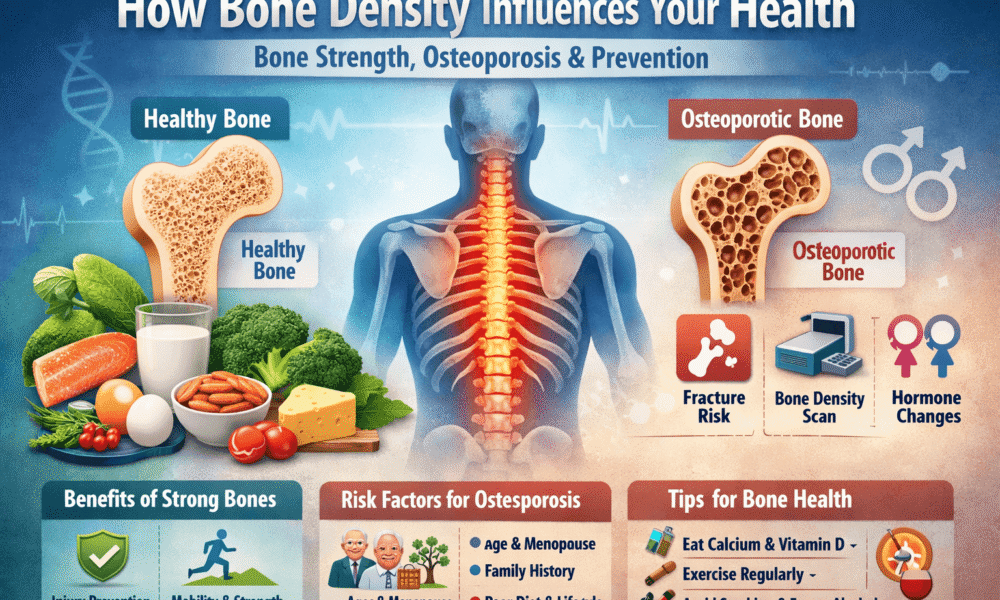

How Bone Density Influences Your Health | Bone Strength, Osteoporosis & Prevention
Learn how bone density influences your health, bone strength, fracture risk, and osteoporosis. Discover symptoms, causes, tests, and tips to keep bones strong.
How Bone Density Influences Your Health
Bones are much more than the rigid framework of the human body. They support movement, protect vital organs, anchor muscles, and store essential minerals like calcium and phosphorus. One of the most important factors that determines bone strength and long-term skeletal health is bone density.
Low bone density can silently weaken your bones over time, increasing your risk of fractures, posture changes, mobility problems, and conditions like osteoporosis. That’s why understanding bone density is essential for maintaining a healthy and active life at every age.
In this guide, you’ll learn what bone density is, why it matters, what causes it to decline, and how to improve it naturally.
What Is Bone Density?
Bone density refers to the amount of mineral content — mainly calcium and phosphorus — present in your bones. It reflects how strong and solid your bones are.
The denser your bones, the stronger they tend to be. Lower bone density means bones are becoming thinner, weaker, and more fragile.
In simple words:
- High bone density = stronger bones
- Low bone density = weaker bones and higher fracture risk
Bone density is often used to assess your risk of developing osteopenia and osteoporosis.
Why Bone Density Is Important for Your Health
Bone density directly affects your body’s ability to stay strong, balanced, and protected.
Healthy bone density helps you:
- Maintain a strong skeletal structure
- Reduce the risk of fractures
- Support posture and balance
- Protect internal organs
- Stay physically active as you age
- Preserve mobility and independence
When bone density drops too much, everyday activities like walking, bending, or even coughing can increase the chance of a bone fracture.
How Bones Change Over Time
Bones are living tissues that are constantly renewing themselves through a process called bone remodeling.
Your body:
- Builds new bone
- Breaks down old bone
During childhood and adolescence, bone formation happens faster than bone breakdown, helping bones grow stronger and denser.
Most people reach their peak bone mass around age 30. After that, bone loss gradually starts to exceed bone formation.
What this means:
The more bone mass you build early in life, the more “bone reserve” you have as you age. This reduces your future risk of osteoporosis and fractures.
How Low Bone Density Affects Your Body
Low bone density does not just affect bones — it can influence your overall health and quality of life.
1] Increased Risk of Fractures
Weak bones are more likely to break, even after a minor fall or small injury.
Common fracture sites include:
- Hip
- Wrist
- Spine
- Shoulder
2] Osteoporosis
One of the biggest consequences of low bone density is osteoporosis, a condition where bones become porous, brittle, and fragile.
Osteoporosis is often called a “silent disease” because it usually develops without obvious symptoms until a fracture occurs.
3] Poor Posture and Height Loss
As spinal bones weaken, they may compress over time, causing:
- Stooped posture
- Back pain
- Loss of height
4] Reduced Mobility and Independence
Bone weakness can make physical movement difficult and may reduce confidence in walking, climbing stairs, or exercising.
5] Slower Recovery from Injury
People with poor bone density may take longer to heal after fractures or orthopedic problems.
Osteoporosis: The Silent Bone Disease
Osteoporosis is one of the most common bone health conditions worldwide. It occurs when bone mass decreases and bone structure deteriorates.
Why it’s dangerous:
- It often develops silently
- Many people do not know they have it
- The first sign may be a broken bone
Who is more at risk?
Although osteoporosis can affect anyone, it is more common in women, especially after menopause due to declining estrogen levels.
Signs and Symptoms of Low Bone Density
Low bone density itself usually does not cause noticeable symptoms in the early stages. However, advanced bone loss may lead to:
- Frequent fractures
- Back pain
- Stooped posture
- Loss of height over time
- Weak grip strength
- Reduced mobility
Because symptoms may not appear early, bone density testing is very important for prevention and early diagnosis.
What Causes Bone Density to Decrease?
Several factors can reduce bone density over time. Some are related to age and genetics, while others are lifestyle-based and preventable.
Major Factors That Affect Bone Density
1] Low Calcium Intake
Calcium is essential for bone formation and strength. A long-term lack of calcium can lead to:
- Weak bones
- Early bone loss
- Increased fracture risk
2] Vitamin D Deficiency
Vitamin D helps your body absorb calcium effectively. Without enough vitamin D, your body cannot use calcium properly.
3] Physical Inactivity
Bones become stronger when they are used regularly. A sedentary lifestyle can weaken bones over time.
4] Aging
Bone density naturally decreases with age, especially after 30.
5] Hormonal Changes
Hormones play a major role in bone health.
Examples include:
- Low estrogen after menopause in women
- Low testosterone in men
- Excess thyroid hormone
6] Smoking and Alcohol Use
Smoking and heavy alcohol consumption can interfere with bone formation and calcium absorption.
7] Small Body Frame or Low Body Weight
People with smaller body frames may have less bone mass to begin with, which can increase future risk.
8] Family History
If a parent or sibling has osteoporosis or frequent fractures, your risk may be higher.
9] Digestive or Medical Conditions
Some health conditions reduce nutrient absorption and affect bone strength, such as:
- Celiac disease
- Crohn’s disease
- Eating disorders
- Cushing’s syndrome
- Weight-loss surgery history
10] Long-Term Medication Use
Certain medications can weaken bones over time, including:
- Corticosteroids
- Some antidepressants
- Certain anti-seizure medications
- Some cancer therapies
- Long-term proton pump inhibitors (PPIs)
Who Should Be More Careful About Bone Density?
You may need to pay extra attention to your bone health if you are:
- A woman over 50
- A man over 70
- Postmenopausal
- Underweight
- Physically inactive
- A smoker
- A heavy alcohol user
- Someone with a family history of osteoporosis
- Taking long-term steroid medications
- Recovering from a low-impact fracture
How Is Bone Density Measured?
The most common way to measure bone density is through a bone density scan, also called a DEXA scan (Dual-Energy X-ray Absorptiometry).
What a bone density test does:
- Measures mineral content in bones
- Detects bone loss early
- Helps diagnose osteopenia or osteoporosis
- Assesses fracture risk
When should you get tested?
You may need a bone density test if:
- You are over a certain age
- You’ve had a recent fracture
- You have menopause-related bone loss concerns
- You have strong risk factors for osteoporosis
Always speak to your healthcare provider for personalized advice.
How to Improve Bone Density Naturally
The good news is that there are many practical ways to support bone health and slow bone loss.
1] Eat More Calcium-Rich Foods
Calcium is one of the most important minerals for strong bones.
Best calcium-rich foods include:
- Milk
- Yogurt
- Cheese
- Tofu
- Almonds
- Broccoli
- Kale
- Sardines
- Salmon with bones
- Fortified plant milk
Daily calcium needs (general guide):
- Adults 19–50: 1,000 mg/day
- Women over 50: 1,200 mg/day
- Men over 70: 1,200 mg/day
2] Get Enough Vitamin D
Vitamin D helps your body absorb calcium efficiently.
Sources of vitamin D:
- Sunlight
- Egg yolks
- Fatty fish
- Fortified foods
- Supplements (if recommended)
General daily vitamin D needs:
- Adults 19–70: 600 IU/day
- Adults 71+: 800 IU/day
3] Do Weight-Bearing Exercise
Exercise is one of the best natural ways to improve or maintain bone density.
Bone-strengthening exercises include:
- Walking
- Jogging
- Stair climbing
- Dancing
- Resistance training
- Light strength training
- Tennis
These activities stimulate bone-building cells and improve balance, reducing fall risk.
4] Build Muscle Strength
Strong muscles help support bones and joints. Resistance exercises can improve both bone density and stability.
Helpful options:
- Resistance bands
- Bodyweight workouts
- Dumbbell exercises
- Functional strength training
5] Avoid Smoking
Smoking negatively affects blood supply to bones and reduces the body’s ability to build healthy bone tissue.
6] Limit Alcohol Intake
Excess alcohol may interfere with calcium absorption and bone formation.
A moderate intake is generally considered safer than regular heavy drinking.
7] Maintain a Healthy Body Weight
Being too underweight can increase the risk of low bone density. Maintaining a healthy weight supports hormone balance and bone health.
8] Monitor Hormonal and Medical Conditions
If you have thyroid issues, menopause symptoms, digestive disorders, or other chronic health conditions, regular medical checkups can help detect bone health concerns early.
9] Review Your Medications
If you use medications that may affect bone density, ask your doctor whether:
- You need calcium or vitamin D support
- Bone monitoring is recommended
- There are safer long-term alternatives
10] Get Screened Early If You’re at Risk
Early testing can make a huge difference. Bone loss is easier to manage when detected before major damage occurs.
Best Foods for Strong Bones
A bone-friendly diet should include a variety of nutrients beyond calcium alone.
Top nutrients for bone health:
- Calcium
- Vitamin D
- Magnesium
- Protein
- Vitamin K
- Phosphorus
Bone-supporting foods:
- Dairy products
- Leafy greens
- Nuts and seeds
- Oily fish
- Beans and lentils
- Eggs
- Fortified cereals
- Soy products
Can Bone Density Be Improved After 30?
Yes — although peak bone mass is usually reached by age 30, you can still slow bone loss and improve bone strength later in life with the right habits.
What helps most after 30:
- Resistance training
- Better calcium intake
- Vitamin D optimization
- Hormone management
- Healthy body weight
- Lifestyle changes
While you may not “rebuild” bone the same way as during youth, you can absolutely protect, preserve, and improve bone quality.
When to See a Doctor About Bone Health
You should speak to a healthcare professional if you:
- Have had a fracture after a small fall
- Have a family history of osteoporosis
- Notice height loss or posture changes
- Have gone through early menopause
- Use steroids long-term
- Have digestive or hormone-related disorders
- Are concerned about bone weakness
A doctor may recommend:
- Bone density scan
- Blood tests
- Calcium/vitamin D review
- Bone-protective treatment if needed
Final Thoughts
Bone density plays a crucial role in your long-term health, mobility, and independence. Strong bones help protect your body, support movement, and reduce your risk of fractures and osteoporosis.
The best part is that bone health is not only about aging — it is also about daily habits. A nutrient-rich diet, regular exercise, healthy lifestyle choices, and early screening can go a long way in protecting your bones for life.
Whether you’re in your 20s, 40s, or 60s, it’s never too early — or too late — to take bone health seriously.
FAQs: How Bone Density Influences Your Health
1] What is bone density?
Bone density is the amount of minerals, mainly calcium and phosphorus, present in your bones. It helps determine bone strength.
2] Why is bone density important?
Bone density is important because it affects your risk of fractures, osteoporosis, posture problems, and long-term mobility.
3] What causes low bone density?
Low bone density can be caused by aging, low calcium intake, vitamin D deficiency, lack of exercise, hormonal changes, smoking, alcohol use, and certain medical conditions.
4] How do I know if my bone density is low?
Low bone density often has no early symptoms. A bone density scan (DEXA scan) is the most reliable way to check it.
5] Can low bone density be reversed?
In some cases, bone strength can be improved or stabilized through proper diet, exercise, supplements, and medical treatment if needed.
6] Which foods help improve bone density?
Foods rich in calcium and vitamin D, such as dairy, leafy greens, tofu, sardines, salmon, eggs, and fortified foods, can help support bone health.
7] Is osteoporosis more common in women?
Yes, osteoporosis is more common in women, especially after menopause due to lower estrogen levels.
8] What exercise is best for bone density?
Weight-bearing and resistance exercises like walking, jogging, stair climbing, dancing, and strength training are beneficial for bone density.
Resources Links