



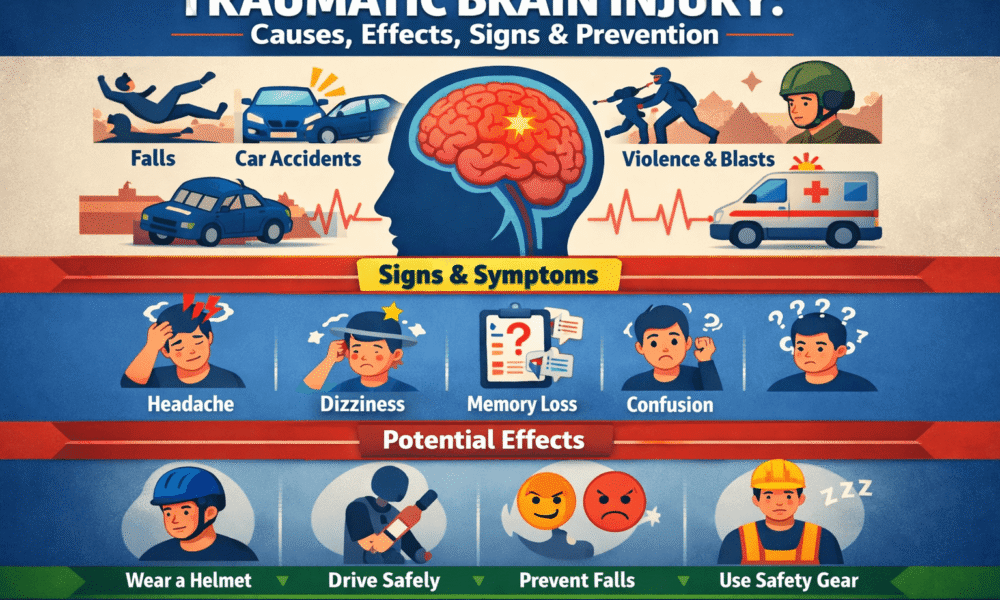

Traumatic Brain Injury (TBI): Causes, Effects, Signs & Prevention
Learn about traumatic brain injury (TBI), including its causes, symptoms, effects, treatment, and prevention. Understand the warning signs and long-term impact of TBI.
Traumatic Brain Injury (TBI): Causes, Effects, Signs and Prevention
A traumatic brain injury (TBI) can change a person’s life in seconds. It may happen after a fall, road accident, sports collision, workplace injury, or blow to the head. While some TBIs are mild and recoverable, others can lead to long-term physical, emotional, and cognitive challenges.
The problem is that many people do not recognize the early signs of traumatic brain injury, especially when symptoms seem mild at first. That is why awareness matters.
What Is Traumatic Brain Injury (TBI)?
Traumatic brain injury (TBI) is a type of brain damage caused by an external force that disrupts normal brain function.
This can happen when:
- The head is hit by an object
- The head strikes a hard surface
- The brain moves violently inside the skull
- An object penetrates the skull
- A blast or explosion affects the brain
TBI can range from mild concussion-like injuries to severe brain damage that affects speech, memory, movement, emotions, and daily independence.
Why Traumatic Brain Injury Is So Serious
The brain controls nearly everything in the body — including:
- Thinking
- Memory
- Emotions
- Speech
- Coordination
- Movement
- Decision-making
- Personality
- Awareness
When the brain is injured, the effects can impact every part of life — not only for the injured person, but also for their family and caregivers.
Some people recover well. Others may face lasting disabilities, behavioral changes, cognitive problems, or emotional struggles for months or even years.
How Does Traumatic Brain Injury Happen?
TBI can happen almost anywhere — at home, on the road, at work, in sports, or during emergencies.
Common ways TBI occurs include:
- Road traffic accidents
- Falls
- Sports injuries
- Workplace accidents
- Physical assaults
- Blast injuries
- Object-related head trauma
- Penetrating injuries such as gunshot wounds
Even a “mild” injury should not be ignored, especially if symptoms appear later.
Main Causes of Traumatic Brain Injury
Understanding the causes of traumatic brain injury helps with both prevention and early recognition.
1] Falls
Falls are one of the most common causes of TBI, especially in:
- Older adults
- Young children
- Workers in high-risk environments
A simple slip-and-fall accident can cause a serious head injury.
2] Road Traffic Accidents
Car, motorcycle, bicycle, and pedestrian accidents are major causes of TBI.
Head injuries may occur when:
- The head hits the dashboard, steering wheel, or window
- The body is thrown violently during impact
- A helmet or seatbelt is not used
3] Sports and Recreational Injuries
Contact sports and high-impact activities can lead to concussions and other brain injuries.
Examples include:
- Football
- Cricket
- Boxing
- Cycling
- Skating
- Wrestling
- Gymnastics
Repeated head trauma in sports can also have long-term effects.
4] Workplace Injuries
TBI can happen in industrial, construction, or factory environments due to:
- Falling objects
- Machinery accidents
- Slips and falls
- Heavy equipment incidents
5] Violence or Physical Assault
Blunt force trauma, assault, or weapon-related injuries can cause severe brain damage.
6] Blast Injuries
Explosions and blast waves can affect brain tissue even when there is no visible head wound. These injuries are more commonly discussed in military and high-risk emergency settings.
Types of Traumatic Brain Injury
Traumatic brain injury can happen in different ways depending on how the brain is affected.
1] Closed Head Injury
A closed head injury happens when the skull remains intact, but the brain is injured internally.
Common causes:
- Falls
- Car accidents
- Sports collisions
This type may cause:
- Bruising
- Swelling
- Bleeding
- Diffuse brain damage
2] Open Head Injury
An open or penetrating head injury happens when an object breaks through the skull and directly damages brain tissue.
Examples include:
- Bullet wounds
- Sharp object penetration
- Severe trauma
These injuries are often life-threatening and may cause focal brain damage.
3] Diffuse Axonal Injury (DAI)
This is one of the most serious forms of TBI.
It happens when the brain moves rapidly inside the skull, causing the long nerve fibers (axons) to stretch or tear.
DAI is often linked to:
- High-speed crashes
- Violent shaking
- Major blunt force trauma
This type of injury may cause:
- Unconsciousness
- Severe cognitive impairment
- Long recovery
- Coma in serious cases
Signs and Symptoms of Traumatic Brain Injury
TBI symptoms may appear immediately or hours to days later, depending on the severity.
That is why any head injury should be taken seriously.
Common Signs of Mild Traumatic Brain Injury
A mild TBI is often called a concussion.
Symptoms may include:
- Headache
- Dizziness
- Confusion
- Nausea
- Sensitivity to light or noise
- Memory problems
- Difficulty concentrating
- Mood swings
- Fatigue
- Irritability
- Brief loss of consciousness (sometimes)
Even when scans appear normal, symptoms can still be very real and disruptive.
Signs of Moderate to Severe TBI
A more serious brain injury may cause major physical and neurological problems.
Symptoms may include:
- Loss of consciousness
- Repeated vomiting
- Slurred speech
- Seizures
- Unequal pupil size
- Severe headache
- Weakness in arms or legs
- Difficulty waking up
- Loss of coordination
- Agitation or unusual behavior
- Confusion that worsens
- Memory loss
- Coma
Emergency warning:
Seek urgent medical attention if someone has persistent confusion, repeated vomiting, seizures, or loss of consciousness after a head injury.
Effects of Traumatic Brain Injury
The effects of TBI can be mild, temporary, long-lasting, or life-changing depending on the injury.
1] Physical Effects
Traumatic brain injury may affect the body’s normal movement and function.
Possible physical effects include:
- Headaches
- Balance issues
- Weakness
- Fatigue
- Dizziness
- Sensory problems
- Coordination difficulties
- Seizures
2] Cognitive Effects
The brain’s ability to process information may be disrupted.
Common cognitive issues include:
- Poor concentration
- Memory loss
- Slow thinking
- Difficulty solving problems
- Trouble learning new information
- Reduced attention span
3] Emotional and Behavioral Effects
Many people with TBI experience emotional changes that are often misunderstood.
These may include:
- Anxiety
- Depression
- Frustration
- Mood swings
- Impulsiveness
- Anger
- Social withdrawal
- Personality changes
4] Communication and Language Problems
Depending on the area of the brain affected, a person may struggle with:
- Speaking clearly
- Understanding language
- Finding words
- Reading or writing
5] Long-Term Disability
Severe TBI can lead to long-term or permanent disability, affecting:
- Employment
- Education
- Relationships
- Daily self-care
- Independence
Some individuals may require lifelong rehabilitation and support.
Mild vs Severe Traumatic Brain Injury
Not all TBIs are the same.
Mild TBI
A mild traumatic brain injury may involve:
- Brief confusion
- Short loss of consciousness (if any)
- Concussion-like symptoms
- Normal MRI or CT scan in many cases
Important note:
“Mild” does not always mean harmless. Symptoms can still significantly affect daily life, work, sleep, and emotional well-being.
Severe TBI
A severe traumatic brain injury may involve:
- Longer loss of consciousness
- Penetrating injury
- Extended memory loss
- Structural brain damage
- Major cognitive or physical impairment
This level of injury often requires emergency treatment, hospitalization, and rehabilitation.
Can TBI Symptoms Be Delayed?
Yes — and this is one of the biggest reasons traumatic brain injury is often missed.
A person may look “fine” after a head injury but later develop symptoms such as:
- Brain fog
- Headache
- Drowsiness
- Vomiting
- Mood changes
- Confusion
- Memory problems
That’s why monitoring after any head injury is extremely important.
How Is Traumatic Brain Injury Diagnosed?
Doctors may use several methods to evaluate a suspected TBI.
Common diagnostic tools include:
- Physical and neurological examination
- Glasgow Coma Scale (GCS)
- CT scan
- MRI
- Memory and cognitive testing
- Observation of symptoms
Diagnosis depends on the severity, symptoms, and how the injury occurred.
Treatment for Traumatic Brain Injury
Treatment depends on whether the injury is mild, moderate, or severe.
Treatment for Mild TBI
Mild TBI or concussion treatment may include:
- Physical rest
- Mental rest
- Symptom monitoring
- Follow-up medical evaluation
- Temporary avoidance of sports or strenuous activity
Treatment for Moderate to Severe TBI
Serious TBI may require:
- Emergency care
- Brain pressure monitoring
- Surgery
- ICU support
- Ventilation support
- Medication management
- Long-term rehabilitation
Traumatic Brain Injury Rehabilitation
Recovery from TBI often continues long after the initial injury has healed.
Rehabilitation may include:
- Physical therapy
- Occupational therapy
- Speech therapy
- Neuropsychological support
- Cognitive rehabilitation
- Emotional and behavioral therapy
The goal is to improve independence, function, and quality of life.
How to Prevent Traumatic Brain Injury
Prevention is one of the most effective ways to reduce TBI risk.
Simple TBI Prevention Tips
- Wear a helmet while riding bikes, motorcycles, or playing contact sports
- Always use seatbelts
- Make homes safer for children and older adults
- Use protective gear at work
- Avoid driving under the influence
- Follow sports safety guidelines
- Reduce fall hazards at home
- Use proper supervision during high-risk activities
When to Seek Medical Help After a Head Injury
You should seek immediate medical care if someone experiences:
- Loss of consciousness
- Persistent or worsening headache
- Vomiting
- Confusion
- Seizures
- Slurred speech
- Balance problems
- Unequal pupils
- Weakness
- Unusual drowsiness
- Memory loss after injury
When in doubt, it is always safer to get checked.
Why TBI Awareness Matters
Traumatic brain injury is often misunderstood because not all symptoms are visible.
A person may “look normal” while struggling with:
- Brain fog
- Emotional instability
- Fatigue
- Memory issues
- Sensory overload
- Difficulty functioning at work or school
Awareness, early diagnosis, and proper support can make a major difference in recovery and quality of life.
Final Thoughts
Traumatic brain injury is more than just a bump to the head. It can affect the brain, body, emotions, memory, communication, and long-term independence.
Recognizing the causes, effects, and warning signs of TBI can help people seek medical care early and reduce the risk of complications.
Whether mild or severe, traumatic brain injury deserves attention, proper treatment, and long-term support when needed.
FAQs: Traumatic Brain Injury (TBI)
1] What is traumatic brain injury?
Traumatic brain injury (TBI) is a brain injury caused by an external force such as a blow, jolt, fall, collision, or penetrating injury.
2] What are the most common causes of TBI?
The most common causes of TBI include falls, road accidents, sports injuries, workplace accidents, and physical assaults.
3] What are the first signs of traumatic brain injury?
Early signs may include headache, dizziness, confusion, nausea, memory problems, sensitivity to light, and mood changes.
4] Can a mild concussion be serious?
Yes. Even a mild traumatic brain injury can cause lasting symptoms and should not be ignored.
5] How long do TBI symptoms last?
Recovery time varies. Some symptoms improve in days or weeks, while others may last for months or longer depending on the severity.
6] Can TBI cause memory loss?
Yes. Memory problems are a common symptom of traumatic brain injury, especially when the brain’s cognitive areas are affected.
7] Is traumatic brain injury curable?
There is no single “cure” for TBI, but early treatment and rehabilitation can significantly improve recovery and quality of life.
8] How can traumatic brain injury be prevented?
Wearing helmets, using seatbelts, preventing falls, using safety equipment, and avoiding risky behavior can reduce TBI risk.
Resources Links
- WHO – Head Injury and Trauma
- NIH / NINDS – Traumatic Brain Injury Information

Other Articles

Natural Remedies – The Best Means to Manage Asthma