



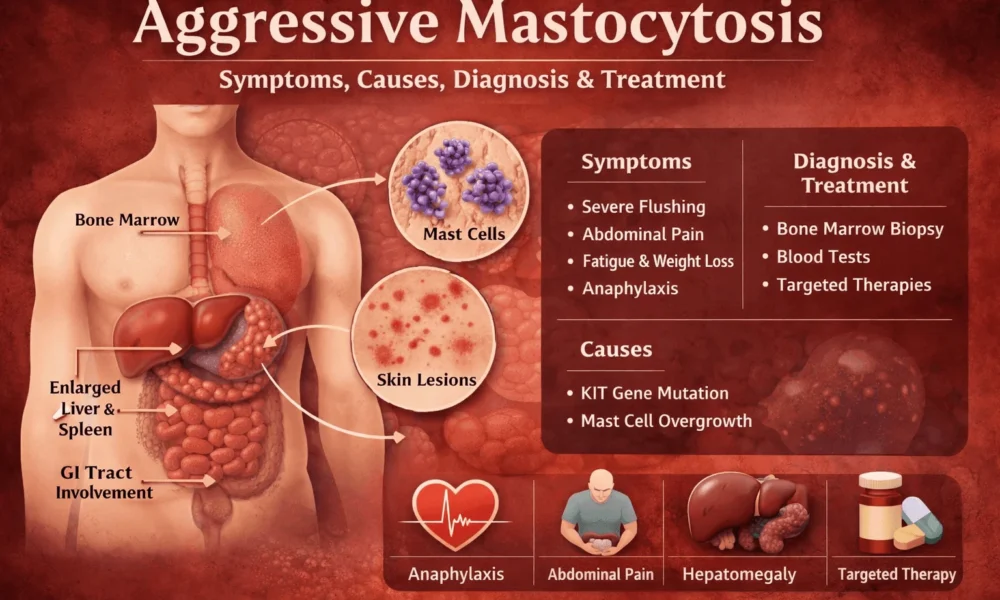

Aggressive Mastocytosis – Symptoms, Causes, Diagnosis & Treatment
Learn about aggressive mastocytosis, including symptoms, causes, diagnosis, treatment options, prognosis, and life expectancy in this complete medical guide.
Aggressive Mastocytosis – Symptoms, Causes, Diagnosis, Treatment, and Life Expectancy
Aggressive mastocytosis is a rare and serious form of systemic mast cell disease in which abnormal mast cells build up in organs such as the bone marrow, liver, spleen, gastrointestinal tract, and bones. Unlike milder forms of mastocytosis, aggressive systemic mastocytosis (ASM) can damage organs and significantly affect quality of life.
This guide explains what aggressive mastocytosis is, early warning signs, causes, diagnosis, treatment options, prognosis, and frequently asked questions—in a clear, medically responsible, and SEO-friendly format for readers and search engines alike.
What Is Aggressive Mastocytosis?
Aggressive mastocytosis, also called aggressive systemic mastocytosis (ASM), is an advanced subtype of systemic mastocytosis, a disorder caused by an abnormal accumulation of mast cells in the body.
Mast cells are immune cells involved in allergic reactions and inflammation. They normally help protect the body, but when too many mast cells collect in tissues and release excessive chemicals such as histamine, prostaglandins, and leukotrienes, they can cause widespread symptoms and organ damage.
In aggressive mastocytosis, the disease goes beyond skin symptoms and begins to affect organ function, especially the:
- Bone marrow
- Liver
- Spleen
- Gastrointestinal tract
- Bones
- Lymph nodes
This condition is considered a form of advanced systemic mastocytosis and requires close evaluation by a hematologist or mast cell disease specialist.
Types of Mastocytosis
Mastocytosis is not a single condition. It includes several subtypes:
Main types of mastocytosis:
- Cutaneous mastocytosis
- Indolent systemic mastocytosis (ISM)
- Smoldering systemic mastocytosis (SSM)
- Systemic mastocytosis with associated hematologic neoplasm (SM-AHN)
- Aggressive systemic mastocytosis (ASM)
- Mast cell leukemia (MCL)
- Mast cell sarcoma
Among these, aggressive mastocytosis is one of the more severe forms because it causes organ dysfunction rather than only mediator-related symptoms such as itching or flushing.
Aggressive Mastocytosis Symptoms
Symptoms of aggressive mastocytosis can vary from person to person. Some symptoms come from mast cell chemical release, while others are caused by direct tissue infiltration and organ damage.
Common symptoms of aggressive mastocytosis
Skin and allergy-like symptoms
- Flushing
- Itching
- Hives or brown skin lesions
- Skin redness after rubbing (Darier’s sign)
- Swelling
- Severe allergic reactions
- Recurrent anaphylaxis
Gastrointestinal symptoms
- Abdominal pain
- Diarrhea
- Nausea
- Vomiting
- Bloating
- Acid reflux
- Heartburn
- Stomach cramps
- Malabsorption and weight loss
Bone and musculoskeletal symptoms
- Bone pain
- Osteoporosis
- Osteopenia
- Fragile bones
- Bone lesions or osteolysis
Blood and systemic symptoms
- Fatigue
- Weakness
- Unexplained weight loss
- Low blood counts (anemia, thrombocytopenia, cytopenia)
- Fever in some cases
Organ-related symptoms
- Enlarged liver (hepatomegaly)
- Enlarged spleen (splenomegaly)
- Swollen lymph nodes
- Ascites (fluid in the abdomen)
- Portal hypertension
- Liver dysfunction
The defining feature of aggressive mastocytosis is that mast cell infiltration causes actual organ impairment, not just allergic-type symptoms.
What Causes Aggressive Mastocytosis?
Aggressive mastocytosis is usually caused by genetic mutations in mast cells, especially in the KIT gene.
KIT mutation and mastocytosis
The most common mutation linked to systemic mastocytosis is:
KIT D816V mutation
This mutation causes mast cells to grow and survive abnormally. As a result, they accumulate in tissues and release excess inflammatory chemicals.
Important facts:
- Most adult cases are sporadic, meaning they are not inherited
- The mutation is usually somatic, which means it occurs after conception
- It is typically not passed from parent to child
- Rare familial cases have been reported
The presence of a KIT mutation helps support the diagnosis and can also influence treatment decisions.
Is Aggressive Mastocytosis Cancer?
This is one of the most common questions people ask.
Short answer:
Aggressive mastocytosis is considered a serious blood-related neoplastic disorder, but not all cases behave like classic cancer.
However, it is classified under advanced systemic mastocytosis, and it can behave aggressively, especially when it causes organ failure or overlaps with blood cancers.
More severe related forms include:
- Mast cell leukemia
- SM-AHN (systemic mastocytosis with associated blood cancer)
- Mast cell sarcoma
Because of this, aggressive mastocytosis is often managed by specialists in hematology and oncology.
How Is Aggressive Mastocytosis Diagnosed?
Diagnosing aggressive mastocytosis usually requires a combination of clinical symptoms, blood tests, bone marrow testing, imaging, and molecular studies.
Key tests used in diagnosis
1) Blood tests
Doctors may look for:
- Anemia
- Low platelets
- High white blood cells
- Eosinophilia
- Abnormal liver function
- Low albumin
2) Serum tryptase test
A high serum tryptase level is one of the major clues.
- A baseline tryptase level above 20 ng/mL strongly supports systemic mastocytosis
- Very high levels may suggest a higher mast cell burden
3) Bone marrow biopsy
This is one of the most important tests for diagnosis.
A bone marrow biopsy can show:
- Dense clusters of mast cells
- Abnormal mast cell shape
- Involvement of bone marrow by mast cell disease
4) Genetic testing
Doctors often test for:
- KIT D816V mutation
- Other mast cell-related mutations
5) Imaging tests
Imaging may be needed to evaluate organ involvement:
- CT scan
- Ultrasound
- Bone scans
- Skeletal imaging
- Liver and spleen imaging
6) Endoscopy or GI evaluation
If digestive symptoms are present, doctors may order:
- Upper GI endoscopy
- Colonoscopy
- Biopsies if needed
Diagnostic Criteria for Systemic Mastocytosis
The diagnosis of systemic mastocytosis is usually based on WHO diagnostic criteria.
Major criterion
- Dense infiltrates of mast cells in bone marrow or another extracutaneous organ
Minor criteria
- Abnormal mast cell appearance
- Expression of CD2 and/or CD25
- Elevated serum tryptase
- Presence of KIT codon 816 mutation
A diagnosis is made when the required combination of these criteria is met.
In aggressive mastocytosis, doctors also look for signs of organ dysfunction, which separates it from indolent or smoldering disease.
How Is Aggressive Mastocytosis Treated?
There is no universal cure for aggressive mastocytosis, but treatment can help control symptoms, reduce mast cell burden, and protect organ function.
Treatment usually has two goals:
- Control mast cell mediator symptoms
- Treat advanced disease and organ involvement
Medications for Symptom Control
1) Antihistamines
These are a cornerstone of treatment.
H1 blockers:
- Help reduce itching, flushing, and allergic symptoms
H2 blockers:
- Help reduce stomach acid, reflux, and GI discomfort
2) Proton pump inhibitors (PPIs)
Used for:
- Acid reflux
- Gastric hypersecretion
- Peptic symptoms
3) Cromolyn sodium
Often helpful for:
- Diarrhea
- Abdominal cramping
- Bone pain
- Headaches
- Some skin symptoms
4) Leukotriene blockers
Sometimes used to improve:
- Flushing
- Allergy-like symptoms
- Respiratory or inflammatory symptoms
5) Corticosteroids
May be used in more severe cases for:
- Malabsorption
- Ascites
- Bone pain
- Severe inflammation
6) Epinephrine auto-injector
This is extremely important.
Patients with mastocytosis should often carry an epinephrine auto-injector
because they may be at risk for life-threatening anaphylaxis.
Targeted and Advanced Treatments
In aggressive mastocytosis, doctors may recommend treatments aimed at reducing abnormal mast cells.
Common advanced treatment options include:
1) Midostaurin
This is an FDA-approved treatment for:
- Aggressive systemic mastocytosis
- SM-AHN
- Mast cell leukemia
It works by targeting abnormal signaling pathways involved in mast cell growth.
2) Cladribine
A chemotherapy-like drug sometimes used in advanced disease.
3) Interferon-alpha
May be considered in selected patients, especially when symptoms or disease burden are difficult to control.
4) Imatinib
May help in specific patients without the KIT D816V mutation or in rare mutation-defined cases.
5) Stem cell transplantation
In selected severe cases, especially with overlapping hematologic disease, stem cell transplant may be considered.
This is not appropriate for every patient and is typically reserved for carefully selected advanced cases.
Triggers to Avoid in Mastocytosis
Because mast cells release chemicals unpredictably, certain triggers may worsen symptoms or provoke anaphylaxis.
Common mastocytosis triggers include:
- Alcohol
- Heat or cold
- Friction or pressure on the skin
- Emotional stress
- Insect stings
- Certain foods
- NSAIDs such as aspirin or ibuprofen
- Narcotic pain medicines
- Muscle relaxants
- Radiocontrast dye
- Certain anesthetic drugs
Important:
People with aggressive mastocytosis should always discuss new medications, surgery, anesthesia, and imaging contrast agents with their doctor in advance.
Aggressive Mastocytosis Prognosis and Life Expectancy
The prognosis of aggressive mastocytosis depends on:
- Degree of organ involvement
- Blood counts
- Bone marrow findings
- Response to treatment
- Presence of associated blood disorders
- Mutation profile
Factors linked to poorer prognosis may include:
- Severe anemia
- Low platelets
- Hypoalbuminemia
- Excess bone marrow blasts
- Liver dysfunction
- Advanced hematologic involvement
Can people live with aggressive mastocytosis?
Yes—but it is a serious condition that needs specialist care.
Some patients respond well to treatment and symptom control, while others may experience disease progression. Early diagnosis and expert management can make a major difference in quality of life and outcomes.
Complications of Aggressive Mastocytosis
Potential complications include:
- Recurrent anaphylaxis
- Severe osteoporosis
- Bone fractures
- Chronic malabsorption
- GI bleeding
- Cytopenias
- Liver dysfunction
- Portal hypertension
- Progression to more advanced mast cell disease
Because of these risks, long-term follow-up is essential.
When to See a Doctor
You should seek medical attention if you have:
- Recurrent flushing and allergic-type episodes
- Unexplained severe abdominal symptoms
- Bone pain with osteoporosis at a young age
- Frequent anaphylaxis
- Persistent elevated tryptase
- Unexplained enlarged liver or spleen
- Abnormal blood counts with systemic symptoms
If symptoms are severe, evaluation by a hematologist, allergist/immunologist, or mast cell disease specialist is often necessary.
Frequently Asked Questions (FAQs)
Is aggressive mastocytosis rare?
Yes, aggressive mastocytosis is considered a rare disease and is much less common than indolent forms of mastocytosis.
Can aggressive mastocytosis be cured?
There is no guaranteed cure for most patients, but treatment can often help control symptoms and slow disease progression.
What is the difference between indolent and aggressive mastocytosis?
Indolent systemic mastocytosis usually causes symptoms without major organ damage, while aggressive mastocytosis causes organ dysfunction from mast cell infiltration.
Is mastocytosis hereditary?
Most cases are not inherited. They are usually caused by somatic mutations, especially in the KIT gene.
Can aggressive mastocytosis cause anaphylaxis?
Yes. Patients may have a high risk of severe allergic reactions, including anaphylaxis, especially after triggers such as insect stings, medications, or stress.
Final Thoughts
Aggressive mastocytosis is a complex and potentially serious mast cell disorder that goes far beyond skin symptoms. It can affect multiple organs, cause severe allergic-type reactions, and significantly impact daily life. The good news is that advances in diagnosis, targeted therapy, and supportive treatment are improving care for many patients.
Early recognition, proper testing, and specialist-guided treatment are the keys to better outcomes.
For more health education articles, visit Health Care Tips Hub.

Other Articles